

(Long Before I Knew What It Was)
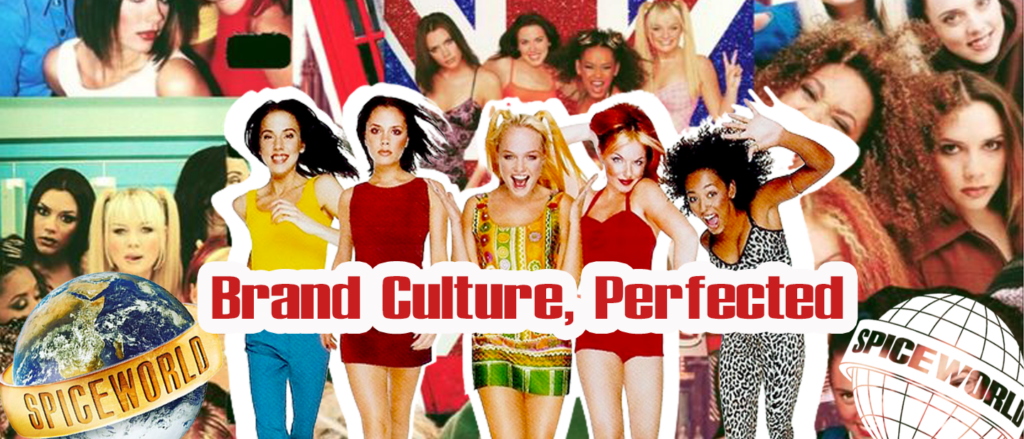
I didn’t learn brand strategy in a study hall or a boardroom.
I learned it at 15 or 16 – the formative years, end-of-high-school, coming-of-age era – when the Spice Girls were so embedded in culture they were impossible to ignore.
They were everywhere.
Top of the Pops. Saturday morning TV. MTV. The radio in the car. Supermarket shelves. Posters on bedroom walls. Stickers, postcards, fan club letters. Crisp packets. Pepsi cans. Even the inevitable debates with friends about who was who.
It wasn’t fandom so much as total immersion. A complete takeover. An ecosystem.
Looking back now, I can see it clearly:
The Spice Girls were my first experience of brand culture – long before I had the language for it.
The “manufactured band” misconception – and where the real story starts
The label everyone loves to throw at them is obvious:
“They were manufactured.”
At the time, that narrative made sense. Five women, instant success – someone must have been pulling the strings.
And yes, they were brought together by management.
But that wasn’t the moment that mattered.
The defining moment was when they took control.
The early version wasn’t yet The Spice Girls. Emma wasn’t part of the lineup, the chemistry hadn’t settled, and the story wasn’t theirs. Once she joined and the dynamic shifted, they realized the record company didn’t understand them – or trust that they knew what was best.
So they walked.
They broke away, took their demo tape, and forced their way into the industry on their own terms. That decision didn’t just change their trajectory; it created the brand.
They weren’t just a band. They were a universe.
Every girl represented something.
Not manufactured sameness – intentional difference.
A clear personality system. A value proposition you could choose, align with, wear, emulate, buy into.
You didn’t just listen to them; you joined them.
And that is brand culture.
It’s the moment a brand stops being a product and becomes a story you see yourself inside. Identity, aspiration, belonging, rebellion, humor, friendship, fun – delivered in five distinct, unmistakable archetypes wrapped in platform shoes and attitude.
Who I was in it all
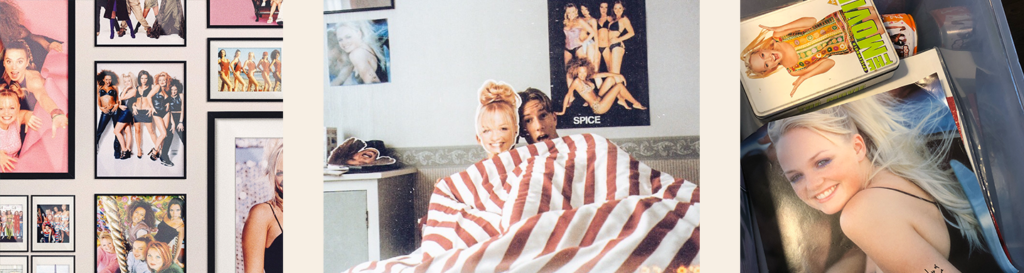
I’ve always connected with Baby Spice.
I wasn’t particularly sporty at the time (although my admiration for Sporty has grown significantly with age). Other people often labelled me Posh – and while I could see the surface similarities, it never quite fit.
Baby felt closer: big smile, playful, outwardly sweet, with plenty of mischief underneath … endlessly youthful ??
That choice wasn’t about preference. It was recognition.
Not “who do I like?” but “who feels like me – or who do I identify with?”
What they gave me emotionally
The Spice Girls gave me permission.
Yes, it was framed as “Girl Power,” and I didn’t identify as a girl. But they were always clear about what that message actually meant: freedom to be yourself. Space to take up room. Confidence without apology.
As a teenager, that mattered.
They encouraged confidence, playfulness, self-expression – without shrinking or softening yourself to fit in. Their world made space for difference, and that made it powerful.
When it became personal
Over the years, I’ve joked about “catching them all” – and I’ve met a few of the girls. The first was Emma, shortly after the group moved into their solo eras.
It was a chance encounter in a bar in Primrose Hill. I was painfully nervous. My best friend at the time took matters into her own hands, and Emma joined us at the table.
We talked. I told her what the Spice Girls had meant to me, personally and culturally. She was warm, generous, and exactly as you’d hope.
That moment stayed with me because it reinforced something I already knew: this wasn’t distant fandom. It felt human. Accessible. Real.
The career twist I didn’t plan
Then came the twist I still find slightly surreal.
My first job after leaving college – where I studied Media and Design – was on Spice World: The Movie
Quite literally.
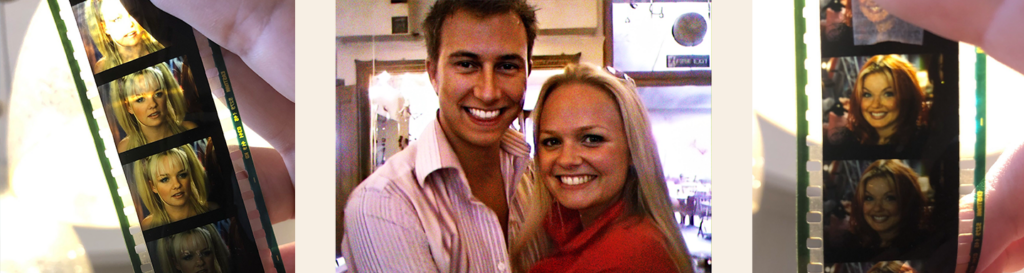
I worked at a post-production house in Soho where the film was being edited. This was the late 90s, so we were dealing with physical reels. My job was to clean the film, remove damaged frames, and splice it back together.
Which meant watching the movie repeatedly.
At the same time, I was surrounded by Chupa Chups with Geri’s face on them, Pepsi cans featuring Victoria, and my Spice Girls Polaroid camera documenting daily life.
Somewhere between cleaning film reels and watching these women dominate the big screen, something clicked.
This wasn’t an accidental success.
This was a fully realized brand ecosystem.
(And yes – I did keep a few perfectly good frames. The runtime may now be marginally shorter than intended.)
What clicked – and why it still holds up
At the time, I wasn’t consciously analyzing branding. That came later, through design roles and experience.
But looking back now, the reason it worked is obvious: authenticity.
Their individual identities were clear and believable. As a collective, they invited you into their world. You didn’t just consume – you participated.
That’s where many brands struggle today.
Too often, brands focus on what they should be. What they think their audience wants. Strategy matters, but it shouldn’t dilute personality or override truth.
In a digital landscape driven by trends, many brands chase relevance instead of creating it. Standing alone can feel risky – but it’s often where the strongest brands are built.
The through-line in my work today
That early imprinting still shows up in my work.
It’s why I start with personality systems and archetypes.
Why I care deeply about clarity and cohesion.
Why I refuse to beige-ify brands.
Why I build worlds, not just logos.
Because in the 90s, long before I had the language for it, I learned something fundamental:
The strongest brands don’t follow culture.
They become it.
If you’re building something now
Start with your story – who you are, why you’re doing what you’re doing, what you genuinely believe.
Everything else follows.
But here’s the part people often miss:
clarity doesn’t always come from staring harder at your own reflection.
Sometimes you need someone on your side – someone who knows how to ask the right questions, spot the patterns, pull out the personality, and shape it into something people instantly get. Someone who can take what’s already there and bring it to life with intention.
That’s where the difference is made.
James Creative Agency is here should you require world domination.